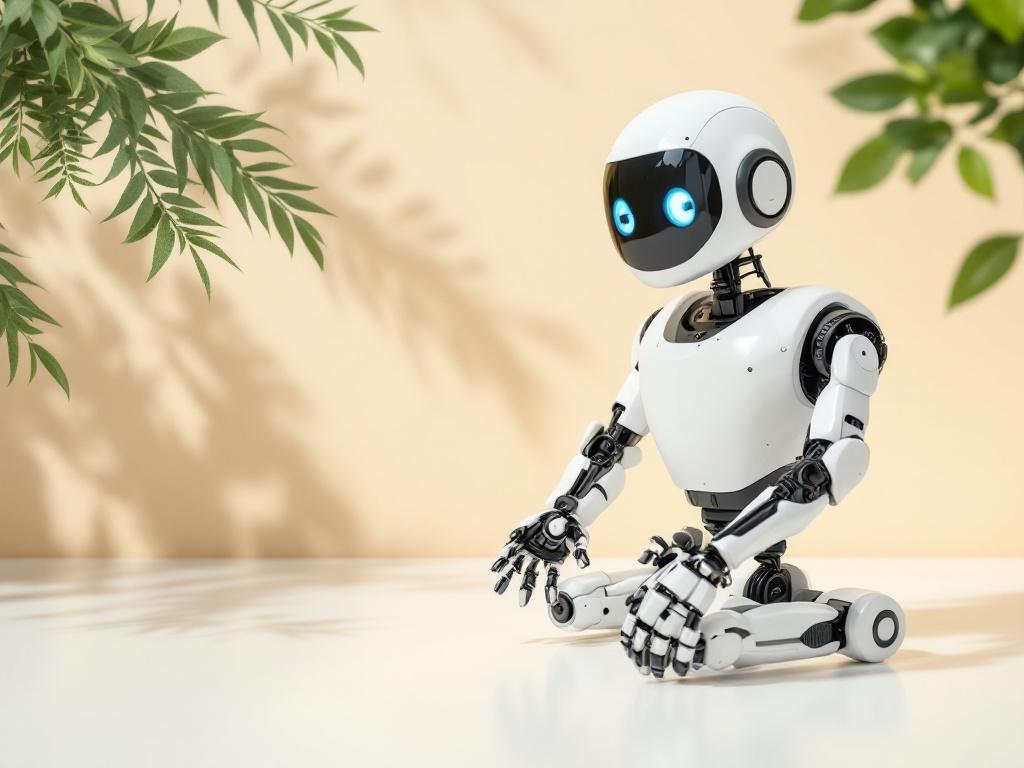
Introduction to Human Action Demonstrations
Human action demonstrations have revolutionized the way we perceive and interact with robotics. Rather than traditional explicit programming, robots are now taught to perform tasks by example - a concept known as "learning from demonstration" (LfD). This approach enables robots to grasp complex capabilities swiftly and efficiently, reshaping the landscape of robotic training and application. Through this, robots can be endowed with new skillsets simply through observing and mimicking human actions. Human action demonstrations not only lower the technical entry barrier but also enable intuitive task-specific instructions, propelling the democratization of robotic training and deployment.
The significance of human action demonstrations extends beyond skill acquisition. It aids in overcoming barriers that have long hindered the widespread deployment of robots in real-world environments. By allowing humans to instruct robots through actions rather than code, teaching becomes accessible to a broader audience without the necessity of specialized expertise. This paradigm shift is crucial for the democratization of robot development, allowing more individuals and businesses to tailor robotic solutions to meet specific needs. In this blog post, we delve into the essential components and benefits of human action demonstrations, exploring their impact on modern robotics.
Understanding Human Action Demonstrations
Human action demonstrations serve as a bridge between sophisticated human intuition and methodical robotic execution. This foundational approach involves various methods to teach robots by showcasing specific behaviors. Methods like kinesthetic teaching, teleoperation demonstration, learning from observations, and sensor-based approaches are pivotal in capturing and interpreting human actions.
Kinesthetic teaching involves physically guiding a robot's limb or body to perform desired actions. The robot records these movements within its kinematic limits, making it possible to reproduce them autonomously. This technique is particularly effective for tasks that demand precise movement, as it closely mimics the nuanced control exercised by humans.
Teleoperation demonstration, another crucial method, allows humans to control robots via input devices like joysticks, mimicking human movements in real-time. This method introduces flexibility in environments where direct human interaction is cumbersome or risky. Meanwhile, learning from observations utilizes computer vision systems to analyze human actions without physical contact. Advanced techniques, such as deep neural networks, perform functions like object detection and action recognition, capturing the essence of human behavior to translate into robotic actions.
Moreover, sensor-based methods employ wearable technologies like accelerometers and pressure sensors embedded in data gloves to capture human motion intricacies. These sensors feed data into machine learning algorithms, enabling robots to replicate and refine complex behaviors. The integration of AI and sensor technology has expanded the horizon of learning from demonstration, making it a cornerstone of modern robotic training.
The Role of Human Action Demonstrations in Developing Robot Skillsets
Human action demonstrations play a critical role in the development of a robot's skillset, allowing robots to perform intricate operations from object manipulation to complex task executions. A robot's capability hinges on the quality and precision of demonstrations they receive. Demonstrations must be meticulously accurate to ensure that robots learn skills that are adaptable and robust, capable of generalizing across various contexts and variations.
Prevalent methodologies have continually evolved from treating demonstrations as rigid action sequences to recognizing them as sources of broad, generalizable knowledge. Through hierarchical learning structures, robots can dissect demonstrations to understand task logic and relative positioning, rather than merely replicating sequences blindly. This form of learning empowers robots with higher degrees of adaptability, enabling them to perform tasks in different environments and under varying conditions.
Hierarchical learning paves the way for robots to grasp and perform multi-level tasks, such as recognizing object positions, understanding task goals, and sequencing actions efficiently. This depth of understanding is crucial for tasks that require not only precision but also problem-solving capabilities in dynamic real-world scenarios. As human action demonstrations continue to improve, the ability of robots to learn and apply skills will only become more seamless and sophisticated.
Integrating Human Action Demonstrations into Robot Workflows
Robot workflows represent structured action sequences essential for efficient task execution. Integrating human action demonstrations into these workflows involves effectively translating human intentions into robotic actions. It’s a complex process that benefits greatly from multi-modal data fusion, blending data from RGB videos that capture human intent with 3D sensor inputs delineating the robot’s execution space.
This integration is not without its challenges. The domain translation gap necessitates converting human-centric demonstration videos into robot-friendly instructions. Here, advanced algorithms like CycleGAN come into play, transforming visual data into executable instructions for robots, thus minimizing the requirement for customized datasets.
Another challenge is task complexity, where robots must extract and execute key instruction stages from comprehensive demonstrations. Thanks to model-based reinforcement learning, robots can now refine their performance with limited human input, practicing tasks until mastery is achieved.
Data collection is often a burden, requiring extensive annotated datasets. But, leveraging human-generated videos without such exhaustive annotations significantly reduces the time and cost associated with data preparation, facilitating faster iterations and deployments.
Skill Sharing through Human Action Demonstrations
Skill sharing is the cornerstone of broadening a robot's functional repertoire. Through human demonstrations, learned skills become transferable across different platforms and tasks, greatly enhancing robots' scalability and applicability. Successful skill-sharing endeavors feature reduced training overhead and bolster a robot’s ability to generalize learned behaviors to novel situations.
Robots benefit from being able to apply skills learned from one context to another, thereby reducing the need for repetitive and resource-heavy training processes. With demonstrations serving as knowledge foundations, robots craft a transferable understanding, adaptable to unfamiliar objects and varied tasks.
Additionally, this skill generalization is particularly beneficial for real-world applications. Robots trained with human demonstrations can operate across diverse environments without the prerequisite of specialized hardware or intricate reconfiguration. This versatility leads to more fluent and efficient deployment of robotic technologies in areas from manufacturing to service industries.
Advancements and Future Directions
Technological advancements are continually refining the scope and effectiveness of human action demonstrations. The rise of vision-based learning systems integrates deep neural networks with standard cameras to derive insights from simple RGB inputs, rendering specialized demonstration hardware unnecessary.
Multimodal encoding, blending video feed analysis with spatial reasoning, enhances the predictive accuracy of action sequences, allowing robots to interpret not just what is occurring but the context behind the actions.
Large language models, when combined with vision systems, bring a layer of semantic comprehension to the table. They allow robots to not only mimic actions but also understand underlying intents and desired outcomes, thus fostering more intelligent decision-making processes.
Model-based reinforcement learning further aids this evolution by granting robots the capability to autonomously refine their skills post-demonstration, demanding minimal human oversight. This opens the gateway to fully autonomous robotic systems that learn and adapt on-the-fly, promising broad implications for robotics in everyday life.
Future trajectories see us moving towards enhanced cross-platform skill transfer, where a single demonstration can yield transferable skills across robot models with varying structures. This will facilitate fully automated task setups and broaden the spectrum of robotic functions beyond mere manipulation to encompass navigation, assembly, and human collaboration.
Conclusion on Human Action Demonstrations and Robotics
Human action demonstrations are a transformative force in enhancing robot capabilities and workflows. By shifting the focus towards human-centered training, these demonstrations establish a new paradigm in robotics, fostering applications across numerous domains. As robotics technology continues to intersect with human ingenuity, the scope and impact of human action demonstrations will inevitably expand, offering yet more society-altering possibilities.
Engagement from enthusiasts and professionals alike in exploring and researching human action demonstrations will play a vital role in realizing the full potential of this approach, solidifying its place in shaping the future of robotics.
Call to Action
Readers are invited to share their experiences and insights about human action demonstrations. Your contributions and reflections can help expand the knowledge base surrounding this cutting-edge methodology and its implications for the future of robotics. As we collectively explore these advancements, we pave the way for a world where robots are an integral part of our everyday environments.